
Knowledge is your true value
GeographyNetwork Map23 hours ago

Crown Prince Mohammed bin Salman - Diplomatic and Strategic Network Map

👑

Crown Prince Mohammed bin Salman

Saudi Crown Prince and PM, Leader of economic and political transformation

10 connections
🇺🇸
United StatesGlobal superpower

Historic deep relationship based on security and energy, with some tensions over foreign policy

Strategic Ally
🇨🇳
ChinaEconomic superpower

Saudi Arabia deepens political and economic relations with China to diversify alliances

Strategic Economic Partner
🇷🇺
RussiaRegional and international power

Building balanced partnerships in economic and military sectors serving mutual interests

Convergent Partner
🇪🇬
EgyptKey Arab regional state

Deep strategic cooperation at regional and Arab levels with regular leadership meetings

Historic Arab Ally
🇮🇷
IranShared geographic region

Rooted strategic competition over regional influence and Iraq, Syria, Yemen files

Strategic Regional Rival
🇪🇺
European UnionEconomic and political bloc

Cooperation in economic and trade sectors with aligned views on dialogue issues

Economic Partner
Gulf Arab States (UAE, Qatar)Sibling Gulf states

Relations based on interest and power rather than automatic solidarity, competing for regional influence

Balanced Gulf Relations
🇺🇦
UkraineState in international crisis

Saudi Arabia mediates between Moscow and Kyiv, hosting de-escalation talks

Diplomatic Mediator
🇹🇷
TurkeyImportant regional power

Gradual improvement in relations with focus on economic and political cooperation despite past differences

Convergent Regional Partner
🌍
African NationsContinental nation group

Expanding diplomatic and investment activity in Africa as part of alliance diversification strategy

Diversified Partnerships

Crown Prince Mohammed bin Salman represents a strategic hub in Middle East politics, managing a complex network of international alliances and partnerships. His relationships range from strategic allies to economic partners and regional rivals, reflecting efforts to reposition Saudi Arabia as a significant global middle power.
Source
Related Posts
GeographyArticleyesterday
Earth Pulses Every 5000 Years Scientists Discover Now
A study published in Nature Communications revealed that Earth experienced rapid climate fluctuations recurring every 4 to 5 thousand years 83 million years ago, pushing climate to oscillate between wetter and drier periods. The discovery adds a new dimension to understanding climate in warmer eras, as scientists previously knew major orbital changes affecting hundreds of thousands of years, but now shorter cycles between 1 to 6 thousand years have been detected. Researchers examined ancient Chinese rocks to uncover this pattern hidden from geologists for decades, linking these short cycles to direct astronomical influences on our planet. This means even ancient greenhouse worlds without ice were not stable as imagined, but experienced a hidden rhythm reshaping their climate with astonishing regularity.
Source
GeographyArticleyesterday
43 degrees in March: Geography of anomalous heat
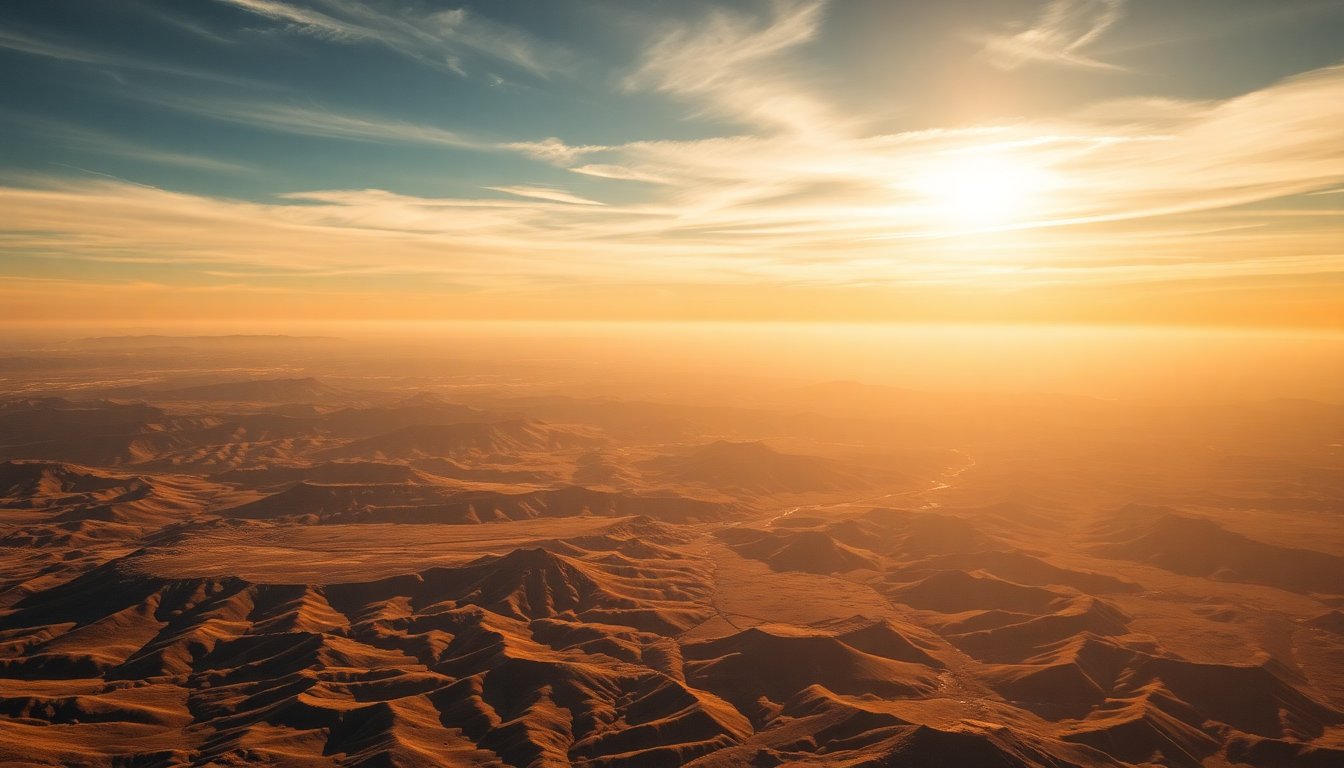
On March 19, 2026, Arizona's desert recorded 43.3 degrees Celsius, shattering the highest temperature ever documented for March in the United States. The crisis lies beyond the number itself—in timing. The region is accustomed to extreme heat, but not months ahead of schedule. According to World Weather Attribution, "events as warm as March 2026 would have been virtually impossible without human-induced climate change." Burning fossil fuels alone added between 2.6 and 4 degrees Celsius. The tragedy unfolds in a fundamental disconnect: disaster systems were built on historical patterns, assuming heat arrives on schedule. Nature no longer keeps its calendar.
GeographyGeographic Data2 days ago
Unemployment Rates in Arab Countries: Comparative Geographic Distribution 2025

This geographic distribution reflects sharp disparities in unemployment rates across Arab countries, with Gulf states enjoying the lowest global rates thanks to economic reform programs, while other nations face major challenges due to conflicts and economic instability. Updated 2025 data shows the varying performance between Arab geographic regions.

🗺️
Comparative unemployment rates across Arab countriesUnemployment rate as percentage of workforce
🇶🇦Qatar0.1%

Lowest Arab unemployment rate due to economic reforms and sector diversification

🇦🇪United Arab Emirates2.1%

Strong economic growth of 4.8% in 2025

🇰🇼Kuwait2.1%

Economic stability and recovery from contraction

🇸🇦Saudi Arabia3.2%

Economic growth of 3.8% with ongoing diversification

🇴🇲Oman3.2%

Growth of 3.1% driven by renewable energy investments

🇪🇬Egypt6.2%

Gradual decline from 6.4% in Q3 2025

🇧🇭Bahrain6.3%

Economic growth of 3.5% with labor market stability

🇲🇦Morocco13.1%

Expected growth of 3.9% but elevated unemployment

Show all (12) →
💡The gap between Gulf states and other nations reflects the impact of political stability, economic diversification, and structural reforms on employment opportunities and sustainable growth.
Source