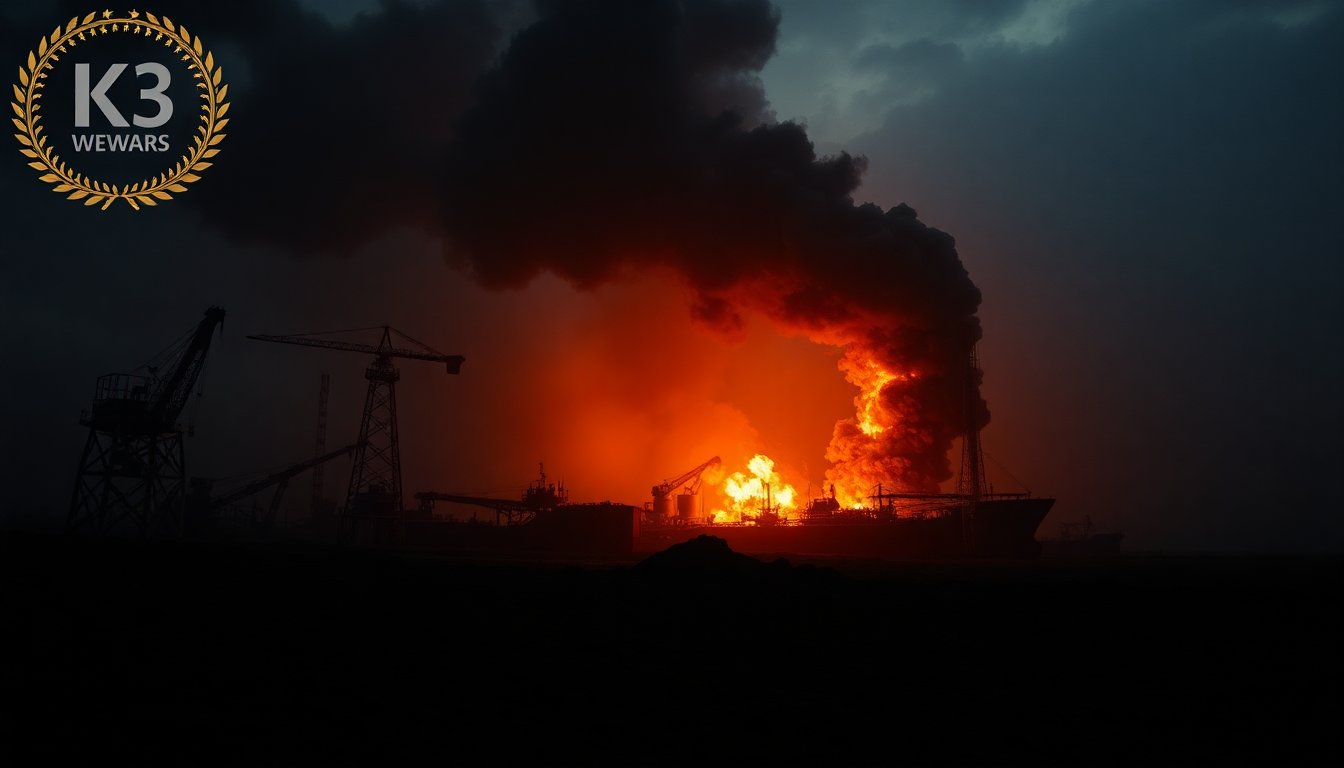
Briefing: Iran War Ignites Global Energy Markets and Threatens Economic Stability
Oil prices surged to $110 per barrel following attacks on major energy facilities, particularly Qatar's Ras Laffan field, the world's largest liquefied natural gas facility.
17% of Qatar's liquefied natural gas exports were disrupted, raising serious concerns about global energy supply security and fuel availability.
Several Gulf states closed their airspace, resulting in cancellation of over 4,000 daily flights and losses estimated in billions for the tourism sector.
Global stock markets declined with S&P 500 falling 0.7%, while gold prices surged as investors sought safe-haven assets.
Financial institutions warned oil prices could reach $200 per barrel by year-end if tensions persist, potentially adding 0.8% to global inflation.
Shipping traffic through the Strait of Hormuz, through which one-fifth of global oil trade passes, was disrupted, threatening regional and global economic stability.
OPEC+ members agreed to increase oil production by 206,000 barrels daily in an attempt to mitigate supply shortages and price pressures.
If energy infrastructure is damaged or destroyed, it will inevitably cause significant delays in rehabilitation, and rebuilding may take months, even years.
The 2026 Iran war has redrawn the map of global economic risks, with military escalation impacts extending beyond the region to strike financial markets, tourism, and global energy supplies, requiring urgent diplomatic intervention to prevent deep economic crisis.
A U.S.-Israeli war on Iran erupted on February 28, 2026, causing immediate disruption to global energy markets. Attacks on Iranian infrastructure included targeting oil and gas facilities in the Gulf, triggering sharp jumps in oil prices and raising concerns about maritime security through the Strait of Hormuz. Data indicates the conflict has resulted in deep economic repercussions extending to global financial markets and the tourism sector.